How Shackleton got all 28 men of the Endurance home
The ice crushed his ship 346 miles from the nearest food. At every fork that followed, Ernest Shackleton weighed the safe-looking road against the one that might bring every man home.
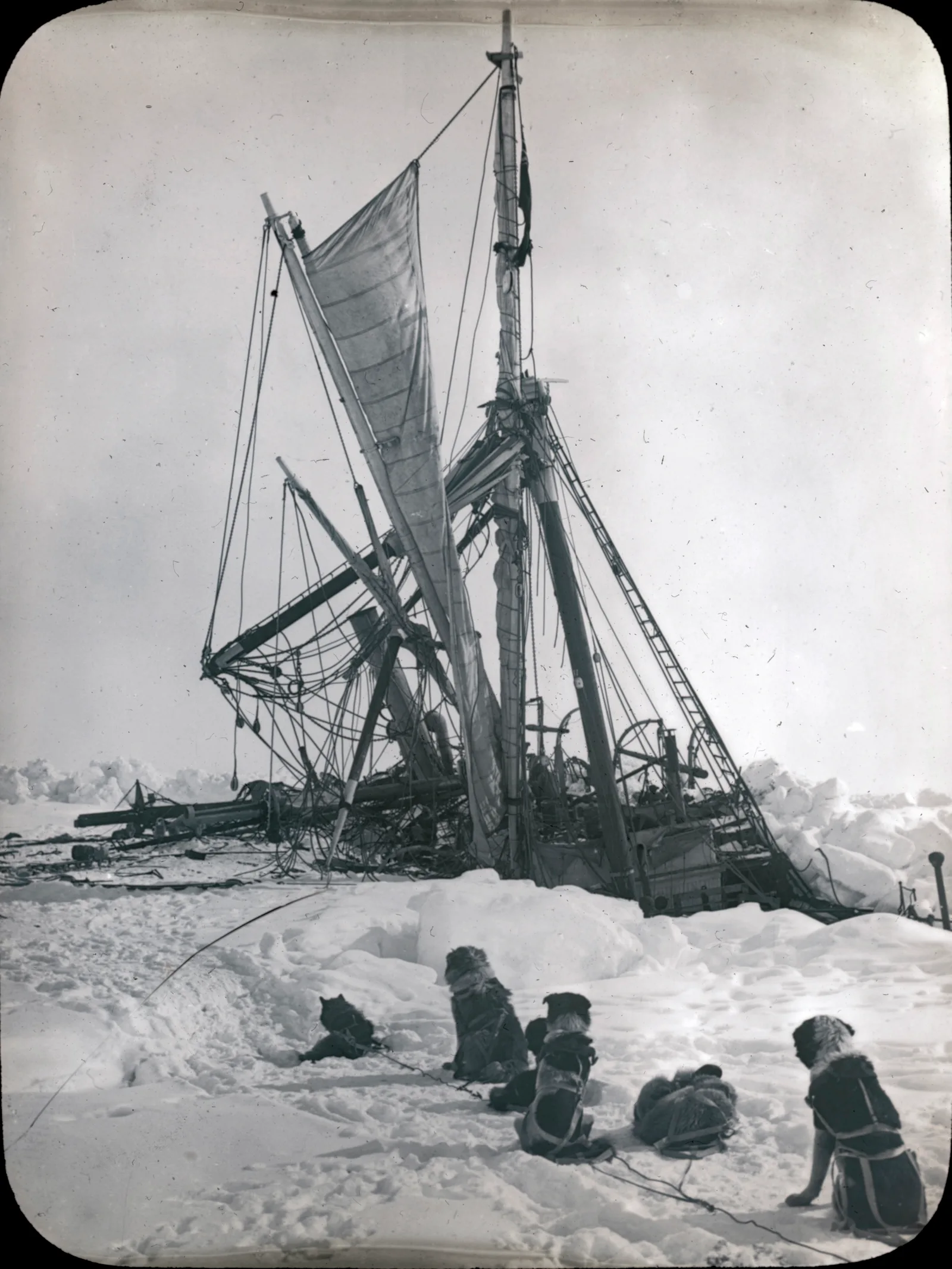
1915 · The Weddell Sea. With his ship crushed in the ice, Ernest Shackleton gave up the crossing of Antarctica he had come to make and set his men one goal instead: every one of them gets home.
The situation
On 27 October 1915, twenty-eight men stood on the sea ice of the Weddell Sea and watched their ship break apart. The Endurance had been locked in the pack for 281 days. No one knew where they were, and they could not call for help.
Ernest Shackleton had come to make the first crossing of Antarctica on foot. That plan was finished. The nearest food and shelter was a hut on Paulet Island, 346 miles away across moving ice. They had three small boats and rations for 56 days, which seals and penguins might double. From here on, every choice was about getting all twenty-eight out alive.
The choices
1915 · March for Paulet Island, not sit and wait
That night the temperature fell to –16°F. Shackleton mustered the men on the floe and told them the distances.
Three roads split from that camp. The nearest barrier coast lay about 180 miles west, the shortest way to solid ground, but it was still about 360 miles from Paulet Island and had nothing to live on. Or they could camp on a heavy floe and let the drift carry them north. Shackleton himself set out the case for waiting: it would spare the boats, "our ultimate means of salvation", and keep them off splitting ice. The price was months of sitting still. The third road was the hardest. March for Paulet Island and its stores, hauling boats of more than a ton each over pressure ridges.
- Head west for the barrier. The nearest land, but still 360 miles from Paulet, with nothing to live on.
- Camp and wait for the drift. Spares the boats, but means months of sitting still.
- March for Paulet Island. Stores waiting there, but boats of over a ton to haul across pressure ridges.
He chose to march. He hoped for five to seven miles a day, and he judged the men would do better feeling they were "on their way to land" than waiting idle. They made about a mile a day in a straight line. On 1 November he stopped and set up Ocean Camp on a heavy floe near the wreck. The Endurance sank on 21 November.
1915 · Stop the second march and camp on the floe
In December the ice seemed to be rotting, and after talking it over with his second-in-command, Frank Wild, Shackleton tried again. On 23 December they set off west by night, hauling two boats and leaving the Stancomb Wills at Ocean Camp. On the ice the carpenter, Harry McNish, refused for a time to take his place in the harness. He soon went back to work, but Shackleton later left him off the list for the Polar Medal.
By 29 December the ice ahead was impassable. In seven days they had made seven and a half miles. Pushing on meant, by Shackleton's own sum, more than 300 days to reach land, and they had food for 42. They could launch the boats into the leads, but there was not enough open water to sail with any safety. The last road was to stop again and hand their fate to the wind.
- Keep marching. Movement at least, but more than 300 days to land on food for 42.
- Launch the boats into the leads. A way off the ice, but not enough open water to sail safely.
- Camp and let the wind work. Saves strength and food, but hands their fate to the drift.
He stopped. They named the floe Patience Camp and stayed more than three months, saving strength and food. In February a party went back for the Stancomb Wills. Days later the leads opened and Ocean Camp could never be reached again.
1916 · Run for Elephant Island
On 9 April 1916 the floe was breaking apart and they launched all three boats. By 13 April the men's lips were cracked and their faces white with salt and frost.
Shackleton's first target had been Deception Island, at the western end of the South Shetlands. It promised the most: the sailing directions listed stores for shipwrecked sailors, whalers might still be there, and a small church offered timber for a better boat. A current carried them east, and Deception slipped out of reach. With Worsley and Wild he then weighed Hope Bay on the mainland, only eighty miles off, and they steered for it. Overnight the pack between them and Hope Bay closed up. That left Elephant Island, about a hundred miles away, with the wind now fair for it. As far as Shackleton knew, nobody had ever landed there.
- Push on for Deception Island. Stores, whalers and timber, but the current had carried it out of reach.
- Steer for Hope Bay. Mainland, only eighty miles off, but the pack closed the way overnight.
- Run for Elephant Island. About a hundred miles with a fair wind, but nobody had ever landed there.
"Obviously we must make land quickly," he wrote, and turned for Elephant Island. All three boats landed on 15 April, the men's first solid ground in 497 days. The cost: the island was barren, far from any shipping lane, and no one would look for them there.
1916 · Sail for South Georgia, not the nearer Falklands
The doctors feared the frostbitten toes of Perce Blackborow, a young sailor, would have to come off. There was food for five weeks at full rations, and winter was coming. Someone had to go for help in the James Caird, a boat about 7 metres long.
Staying put avoided the sea altogether, but Shackleton judged there was "no chance at all" of a search reaching them. Deception Island was nearer, yet it lay into the prevailing wind, with no one likely there in winter. The Falklands made the strongest case on the chart. Port Stanley was about 540 miles away and the nearest place where help was certain, but the boat would have to beat straight into the north-westerlies. South Georgia was over 800 miles off. It was further, but the wind would be behind them, and whalers worked at the stations on its east coast.
- Wait on Elephant Island. No sea crossing, but "no chance at all" of a search reaching them.
- Sail for Deception Island. Nearer, but into the prevailing wind, with no one likely there in winter.
- Sail for Port Stanley. About 540 miles to certain help, but straight into the north-westerlies.
- Sail for South Georgia. Over 800 miles, but downwind, to the whaling stations.
Shackleton chose South Georgia. He reckoned the voyage added nothing to the risk of the men who stayed, and left fewer mouths to feed. Wild would keep command and, if no help came, try for Deception Island in the spring. Shackleton took Frank Worsley to navigate and Tom Crean, who begged to go, then McNish, Timothy McCarthy and John Vincent. Some historians read the choice of McNish and Vincent as partly a way to keep possible troublemakers with him; Shackleton never said so. If the boat sank, nobody would know where 22 men were waiting. After 16 days, with only a few sights of the sun, they reached King Haakon Bay on 10 May.
1916 · Cross South Georgia on foot, not sail round it
They had landed on the wrong side of the island. The whaling station at Stromness was 150 miles away by sea. The boat was weakened, and McNish and Vincent were in no state to sail again.
Sailing round meant water they knew, but 150 more miles in a damaged boat, in winter. They could also have stayed at King Haakon Bay, where there were sea elephants to eat, while 22 men on Elephant Island waited for help that would not come. Overland, Husvik was only about 17 miles in a straight line. No one had ever gone more than a mile inland on South Georgia, though, and the whalers thought the interior impassable.
- Sail round to the whaling stations. Familiar water, but 150 miles in a damaged boat, in winter.
- Winter at King Haakon Bay. Sea elephants to eat, while 22 men waited for help.
- Cross the mountains on foot. About 17 miles, over an interior no one had crossed.
They walked. Shackleton, Worsley and Crean left the sleeping bags behind and took three days' food, a stove, an adze, fifty feet of rope, and screws from the boat driven through their boot soles. After about 36 hours they reached Stromness on 20 May 1916. The other three were picked up by boat soon after.
1916 · Keep going back with whatever ship was at hand
Within days the steel whaler Southern Sky took Shackleton south, but pack ice stopped her about 70 miles from Elephant Island. From the Falklands he heard that Britain had no suitable ship and no relief could come before October.
Waiting for a proper relief ship from Britain would have meant a ship built for the ice, but months away. "October would be too late," Shackleton replied. The other road was any ship anyone would lend, sooner but never meant for the pack.
- Wait for a relief ship from Britain. Built for the ice, but not before October.
- Take any ship anyone would lend. Sooner, but in vessels never meant for the pack.
He took what was offered: a Uruguayan trawler, then the schooner Emma. The ice turned back each one. On the fourth attempt, the Chilean Navy tug Yelcho under Luis Pardo reached the island on 30 August 1916. All 22 men were alive.
What it changed
Every one of the 28 men who sailed on the Endurance came home. The expedition's other half, the Ross Sea party laying depots on the far side of the continent, was not so lucky: three of its men died.
In March 2022 an expedition found the wreck of the Endurance about 3,000 metres down in the Weddell Sea, remarkably intact.
The road not taken
The biggest fork was on the beach at Elephant Island. Waiting looked safest and was probably the deadliest choice. Nobody knew where the men were, and Britain could not send a ship before October even if it had known. Wild's fallback was to sail for Deception Island in the spring, where whalers were not expected back until about mid-November. That meant months more on short rations and then another open-boat voyage. It is likely that not all 28 would have lived to tell it.
The Falklands looked shorter on the chart, but Shackleton doubted the boat could make headway against the wind. Our reading is that she would probably have been driven east into the open ocean. South Georgia was the longer voyage, and the only one the wind allowed.
Legend and record
The story goes that Shackleton recruited his crew with a newspaper advertisement promising "small wages, bitter cold" and "safe return doubtful". No copy of that advertisement has ever been found in any newspaper of the time, and researchers who have searched for it believe it is probably a myth.
Sources
- South, by Ernest Shackleton (1919), full text at Project Gutenberg
- Endurance, 1914-1916 (Scott Polar Research Institute)
- Aurora: the Ross Sea party, 1914-1917 (Scott Polar Research Institute)
- Harry McNish (Linda Hall Library)
- Voyage of the James Caird (Wikipedia)
- What the Endurance shipwreck discovery tells us about the ship's final hours (Royal Museums Greenwich)
- Legendary shipwreck of Shackleton's Endurance discovered in Antarctic waters (Scientific American)
- Ernest Shackleton's famous job ad is probably a myth (Smithsonian Magazine)
